The First Trademark Ever Registered in Chile: A Brief History
What was the first trademark registered in Chile? The trail leads to a law passed in 1874 and to a wine label from 1877 that still sits in INAPI’s archives. Here is the real story of Chile’s 150-year-old trademark system — and what it tells you if you are thinking about protecting your brand in Chile today.
The First Trademark Ever Registered in Chile: A Brief History
| 📌 Quick answer: Chile’s trademark registry was created by the Factory and Trade Marks Act of November 12, 1874. The very first entries in that registry have not survived, so the identity of the first trademark ever registered in Chile is, honestly, lost to history. What we do know for certain: the oldest trademark record preserved by INAPI, Chile’s IP office, is “Santa Rosa de Los Andes”, registered on June 26, 1877 by Napoleón Meneses for wines and liquors. Chile has operated a first-to-file trademark system, with renewable 10-year terms, ever since. |
Trademarks before the law: Chile in the 1800s
Chile’s commitment to intellectual property predates its trademark registry by decades. The Constitution of 1833 already guaranteed authors and inventors exclusive rights over their creations, and a patent decree took effect in 1840 — the first Chilean patent was granted that same year, for a method of making rum. Trademarks had to wait another three decades for a law of their own.
That does not mean brands were absent. Foreign manufacturers were already using their marks in the Chilean market: the Graphic History of Industrial Property in Chile, published by INAPI and preserved by Memoria Chilena, Chile’s national digital library, reproduces a mark used in Chile in 1870 by The Singer Manufacturing Company, the American sewing machine giant — four years before any trademark law existed. Singer’s situation back then is one many foreign companies still face today: a brand present in the market, but no registered right to enforce. That gap is exactly what the 1874 law was designed to close.
1874: Chile’s first trademark law
On November 12, 1874, Chile enacted the law creating a registry for factory and trade marks, open to both national and foreign trademarks from day one — a detail worth noting if you are an international brand owner, because Chile has welcomed foreign filings for over 150 years. The law distinguished between factory marks, placed on goods manufactured in Chile or abroad, and trade marks, used by merchants on the goods they sold.
Some of its provisions sound remarkably modern. Registration granted an exclusive right, counterfeiting carried penalties, trademark assignments had to be made public, and protection lasted ten years, renewable — precisely the same term that applies in Chile today under Law 19,039. One charming period detail: the registry was not run by a ministry but by the National Agricultural Society, as documented in INAPI’s institutional history.
So which was Chile’s first trademark? The honest answer
Here is where an honest historian — and an honest law firm — must be precise: the exact identity of the first registered trademark in Chile is unknown. The earliest entries of the 1874 registry did not survive, and no official source names the first applicant.
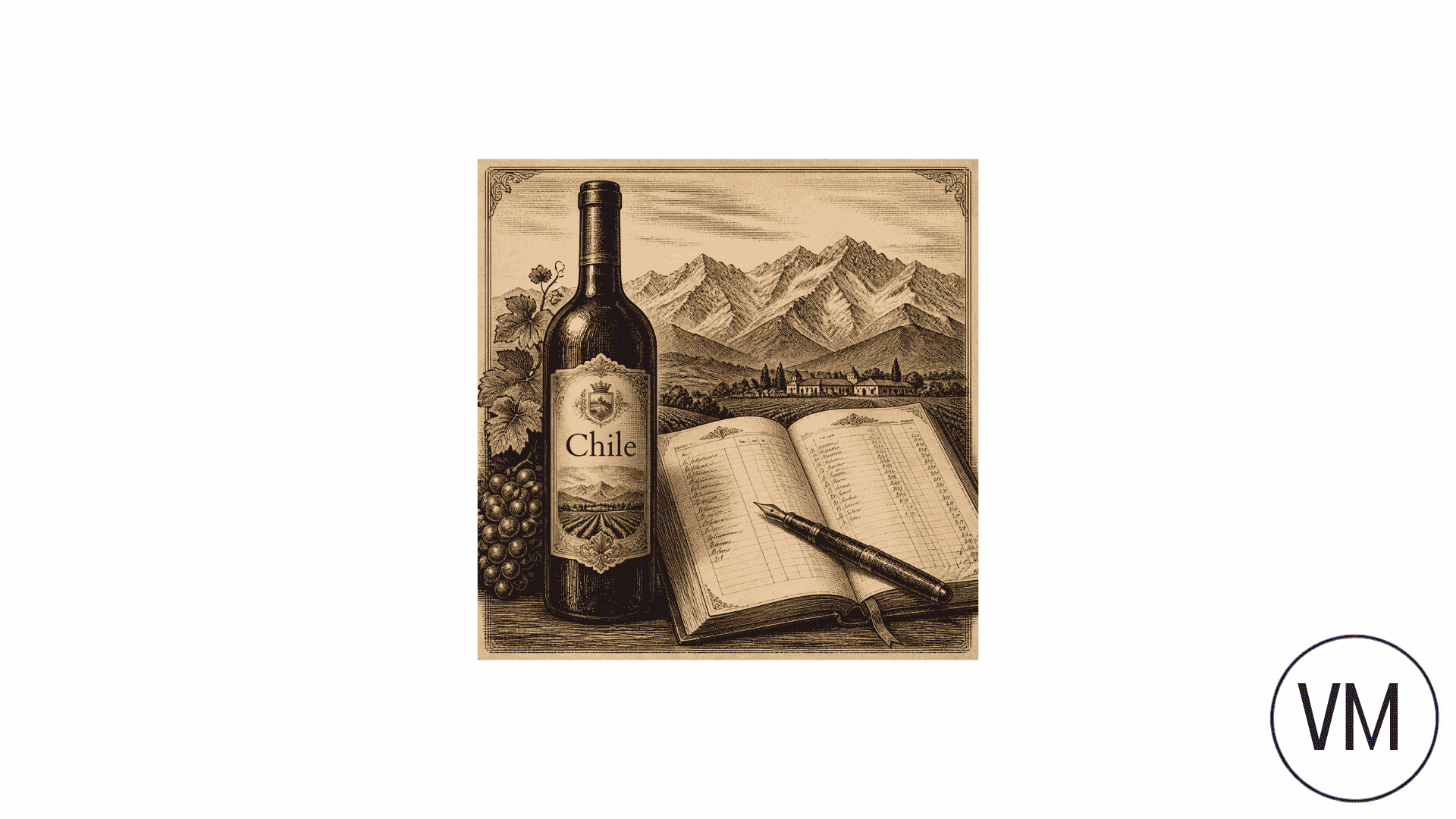
What does exist, certified by INAPI itself, is the oldest preserved trademark record: on June 26, 1877, the mark “Santa Rosa de Los Andes” was registered by Napoleón Meneses for the production of wines and liquors in the town of Los Andes. INAPI states it expressly: this is the oldest trademark registration kept in the Institute’s archives. For all practical purposes, it is the founding trademark of the Chilean system — Chile’s first trademark on record.
It is no coincidence that the oldest surviving mark belongs to a winemaker. Chile’s early registry is dominated by wines, liquors and pisco: the first pisco trademark was granted in 1882, and pisco “El Minero” followed in 1901. Chile’s commercial identity was, quite literally, born in a bottle.
From a handwritten ledger to INAPI: a timeline
| Year | Milestone in Chile’s trademark system |
|---|---|
| 1833 | The Constitution guarantees exclusive rights to authors and inventors |
| 1840 | First patent law; Chile grants its first patent |
| 1874 | Factory and Trade Marks Act creates the trademark registry (November 12) |
| 1877 | “Santa Rosa de Los Andes” is registered — the oldest record preserved |
| 1925 | Decree Law 588: first comprehensive industrial property statute |
| 1931 | Legislation is consolidated; pisco obtains its appellation of origin |
| 1991 | Law 19,039 on Industrial Property enters into force — still the law today |
| 2005 | Law 19,996 aligns the system with WTO/TRIPS standards |
| 2009 | INAPI is created by Law 20,254 and opens on January 1 |
| 2022 | Chile joins the Madrid Protocol, connecting INAPI to WIPO’s international filing system |
In a century and a half, the registry went from a handwritten ledger in a trade association’s office to a fully digital platform that processed more than 72,000 applications in 2025 alone. The administration changed hands many times, but the core logic has never moved: in Chile, rights belong to whoever registers first.
What Chile’s first trademark teaches foreign brand owners
If you are evaluating whether to protect your brand in Chile, this history carries three practical lessons:
- Use alone gives you very little. Singer was using its mark in Chile in 1870, yet only registration under the new law turned that use into an enforceable right. Chile remains a strict first-to-file jurisdiction: prior use abroad, or even in Chile, will rarely save you if someone else files first. We break down what registration actually gets you in Trademark Registration in Chile: Key Advantages.
- A Chilean registration is built to last. The 10-year renewable term has existed since 1874, and it means a properly maintained mark can live indefinitely — the pisco appellation of origin has been protected since 1931 and is still in force. Your registration in Chile is a long-term asset, not a formality.
- Foreign applicants have always been welcome — but need local footing. The 1874 registry accepted foreign marks from its first day. Today, non-residents file through a local representative, and since 2022 they can also designate Chile through the Madrid Protocol, as we explain in How to Register Your Trademark Abroad from Chile: The Madrid System Explained.
Registering in Chile today: easier than 1877, more urgent than ever
Napoleón Meneses had his mark entered by hand into a ledger; you can file online with INAPI and, on average, obtain a decision in under eight months. The process itself is straightforward and we walk through it step by step in Trademark Registration in Chile: Key Steps and Recommendations.
What has changed dramatically is the competition. INAPI received a record volume of over 72,000 trademark applications in 2025, with foreign applicants — led by the United States, China and Germany — accounting for roughly a quarter of filings. Every one of those applications can block yours if it is confusingly similar and filed earlier. In 1877 it was enough to show up at the registry; today, arriving early is the whole game. Budget-wise, the process remains affordable by international standards, as detailed in How Much Does It Cost to Register a Trademark in Chile? And once registered, keeping watch matters: Brand Monitoring in Chile explains how to detect conflicting applications before they mature into registrations.
🧠 Chile’s first trademark, at a glance
| ✅ Chile’s trademark registry dates from November 12, 1874 — over 150 years of continuous protection. |
| ✅ The identity of the very first registered trademark is lost; the earliest entries did not survive. |
| ✅ The oldest record preserved by INAPI is “Santa Rosa de Los Andes” (June 26, 1877), for wines and liquors. |
| ✅ The 10-year renewable term has been the rule since 1874: a maintained mark can last forever. |
| ✅ Foreign trademarks have been registrable in Chile since day one; the Madrid Protocol applies since 2022. |
| ✅ Chile is first-to-file: the lesson of 150 years is that rights go to whoever registers first. |
A century and a half after that lost first entry, the message of Chile’s trademark history is remarkably simple: the brands that endured were the ones that registered early and maintained their rights with discipline. Whether you are a Chilean entrepreneur or a foreign company entering the market, the registry that opened in 1874 is still the only door to a truly enforceable brand in Chile.
Contact us at vonmarttens.cl if you are considering protecting your trademark in Chile — our team handles the entire process before INAPI, from availability search to final registration, for local and international clients alike.
AI Usage Disclosure: This article was written by members of our team; however, AI tools were used to improve readability and structure the text for search engines.
Related articles
- Trademark Registration in Chile: Key Steps and Recommendations
- Trademark Registration in Chile: Key Advantages
- How Much Does It Cost to Register a Trademark in Chile?
- Brand Monitoring in Chile
- How to Register Your Trademark Abroad from Chile: The Madrid System Explained
- What Is a Trademark “Class” and Why Is It Key to Protecting Your Business?
- Trademark appeal: what to do if INAPI rejects your application